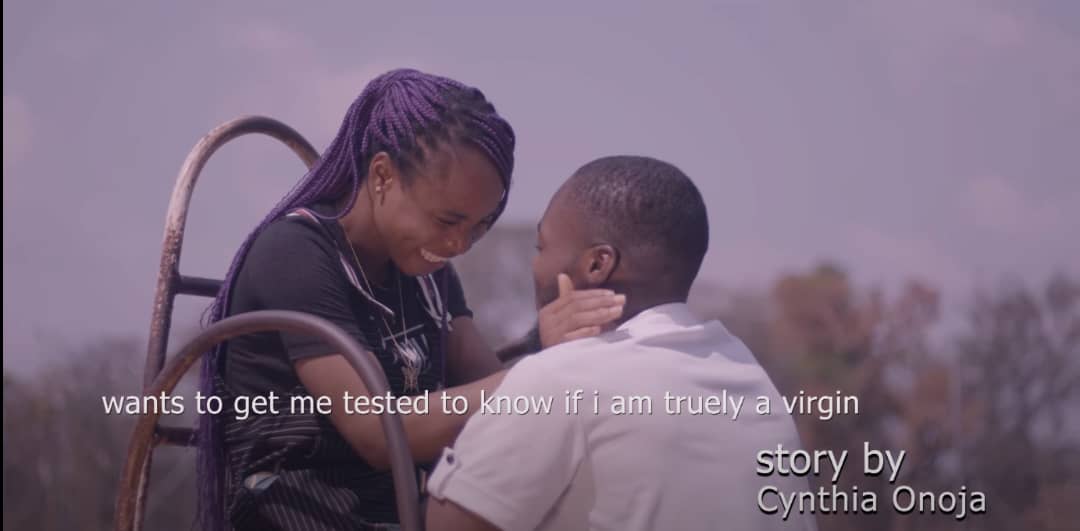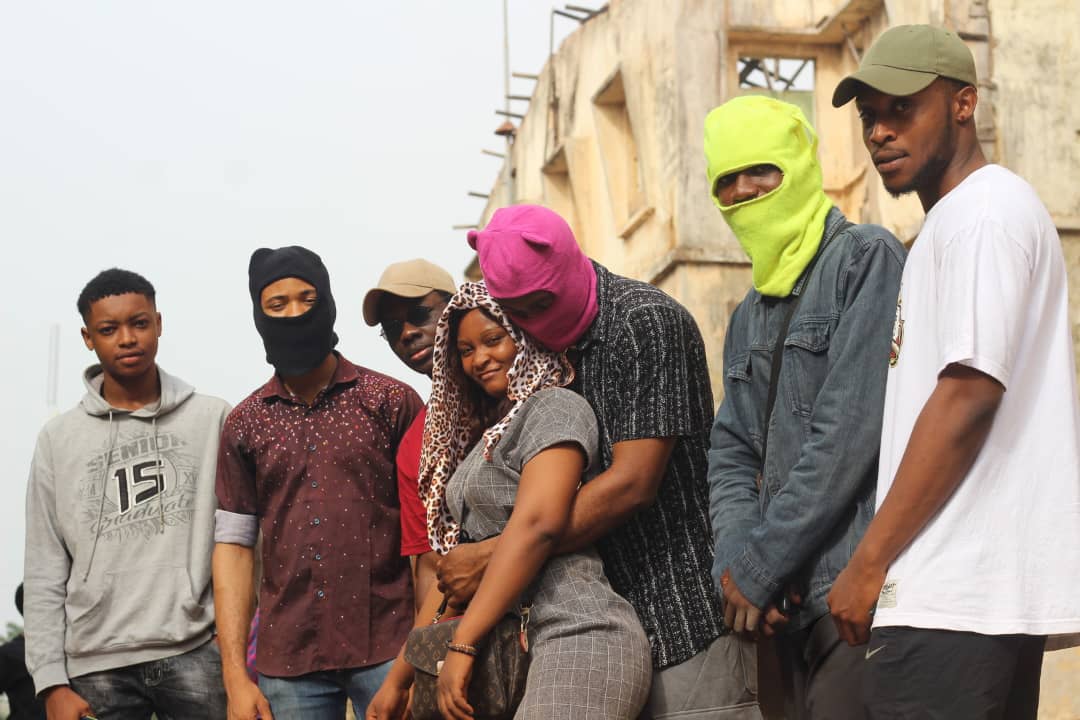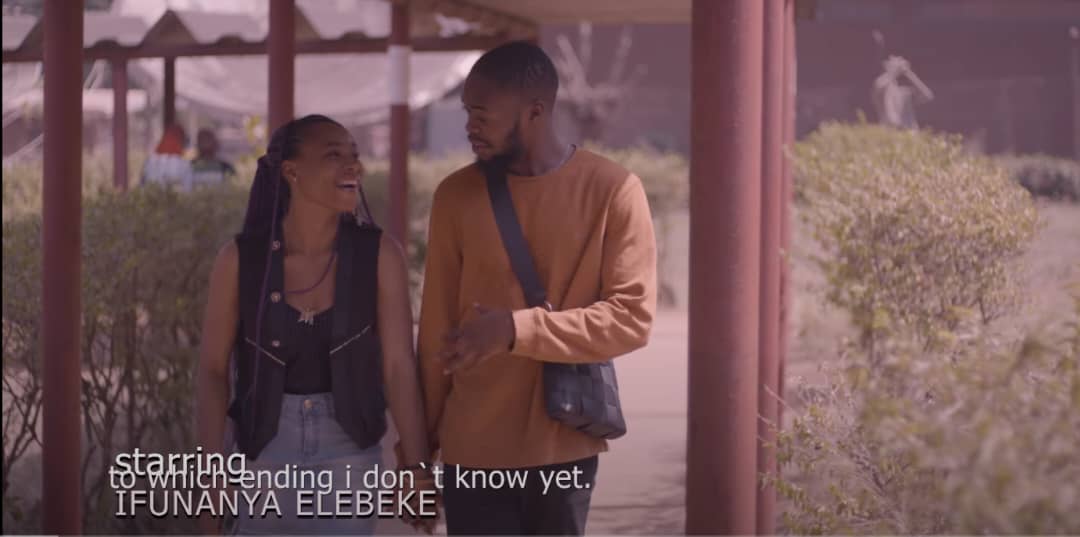
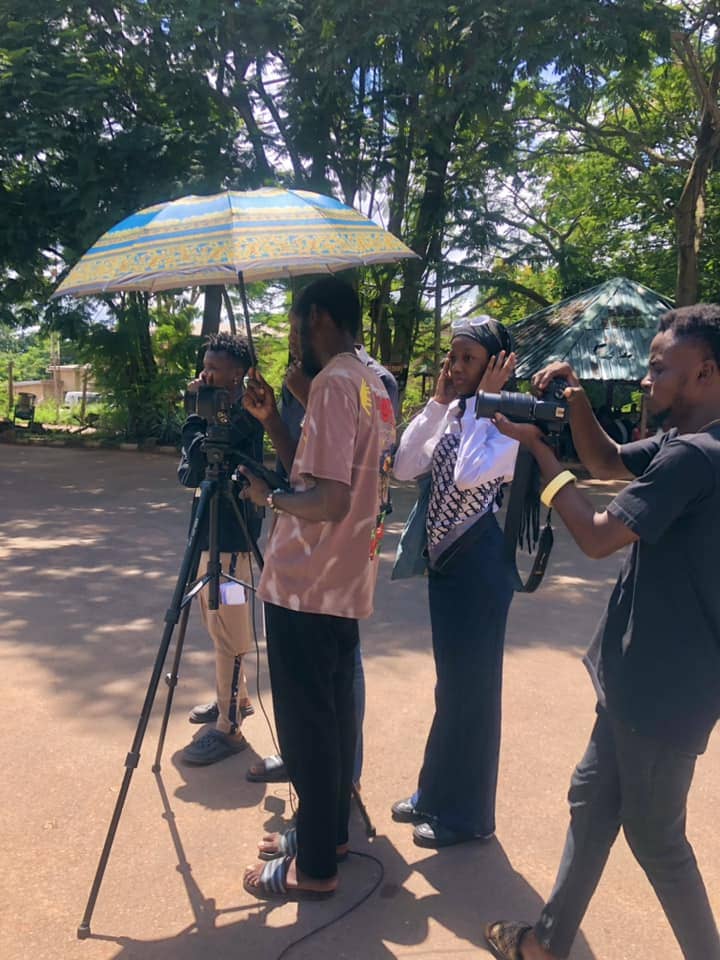
<p>"Expectations" was the film that put Bano Studios on the map. It won Best Short at the All Stars Independent Film Festival in 2021. It was screened at three other African festivals that year. It got us our first paid commercial gig. And we shot it over 30 days in Abuja, on an iPhone 6, with a four-person crew and a budget that wouldn't cover a single day of a real production. This is the unredacted story of how that happened — what worked, what didn't, and what we'd do differently now.</p>
<h2>Why we made it</h2>
<p>We were two years into Bano Studios. We'd shot dozens of skits, a handful of music videos, exactly one corporate ad. We hadn't made anything we were proud of. The team was getting restless. We needed a project that could prove — to ourselves, more than anyone — that we could make a real film.</p>
<p>The script came together in two weeks. Twelve pages. Four characters. Three locations. A story about a young woman in Abuja navigating the gap between what her family expects and what she wants. Not autobiographical, but it pulled from things every member of the writing team had lived through.</p>
<h2>The constraint that defined everything</h2>
<p>We had ₦40,000 to make this film. That's it. Forty thousand naira. The biggest line items were transportation (₦18K), data for a few cast members (₦8K), food during shoot days (₦12K), and ₦2K for a haircut for the lead actor.</p>
<p>Everything else had to be free. Crew worked for free. Locations were donated by friends and family. Wardrobe was the actors' own clothes plus what we could borrow. The camera was an iPhone 6 — borrowed from one of our actors after our better camera (a Canon 700D) developed a sensor issue we couldn't afford to fix.</p>
<h2>Shooting on an iPhone 6 in 2020</h2>
<p>The iPhone 6 was a six-year-old phone when we shot the film. It maxed out at 1080p 30fps. The image had no dynamic range. The lens was a single 28mm-equivalent prime. There was no manual control over shutter speed, ISO, or white balance — we used the FiLMiC Pro app to lock everything.</p>
<p>What we lost in image quality, we gained in mobility. The phone fit in a pocket. We could shoot in actual locations — a real Abuja apartment, a real okada ride, a real market — without permits, without crowds gathering, without anyone asking what we were doing. A teenager filming on a phone is invisible. A 4-person crew with a tripod and lights is a spectacle.</p>
<h2>The 30-day schedule</h2>
<p>We shot weekends only. The actors all had day jobs or were in school. The director had a 9-to-5. So Saturday and Sunday became "production days" for two months straight.</p>
<ul>
<li><strong>Weekend 1:</strong> Apartment scenes (15 of the script's 24 scenes). 14 hours total. We were exhausted.</li>
<li><strong>Weekend 2:</strong> Street and market scenes. The most chaotic. Kids kept walking into shots; we eventually used them as background extras and the film is better for it.</li>
<li><strong>Weekend 3:</strong> Reshoots of the apartment scenes that didn't work. The lead actor's continuity changed because he'd cut his hair (the ₦2K haircut line item from the budget).</li>
<li><strong>Weekend 4:</strong> Final exterior — the okada sequence. We rented an okada for ₦5K (cash to the rider, who waited while we filmed). Shot it in three takes. The scene runs 22 seconds in the final cut.</li>
</ul>
<h2>The post-production mountain</h2>
<p>This is where the film almost died. We had 4 hours of phone footage, no log notes, files named "IMG_4837.MOV" through "IMG_5921.MOV", and exactly one editor (the director, who had not slept properly in six weeks). The first assembly was 47 minutes long. The script was 12 pages — meaning we were targeting 12 minutes.</p>
<p>It took six weeks to get the cut down to 14:30. Every cut session involved someone arguing for a scene that "had to stay in." Eventually the rule became: if the scene doesn't move the protagonist's emotional arc forward, it cuts. By that rule, almost everything got cut.</p>
<p>The color grade was done in DaVinci Resolve (free) on a laptop with 4GB of RAM. It crashed every 15 minutes. The sound mix was done in Audition on the same laptop. The score was three tracks composed by a friend who works as a DJ.</p>
<h2>The festival submissions</h2>
<p>We submitted to nine festivals. Three accepted. ASIFF was the third — and the one that won.</p>
<p>The submission fees added up: roughly ₦35K total across nine festivals (FilmFreeway charges in dollars and the naira was rough that year). Of those nine: three accepted, two rejected, four never replied. That's a ~33% acceptance rate, which we'd later learn is well above average for first-time submitters.</p>
<h2>What we'd do differently now</h2>
<ol>
<li><strong>Budget for sound capture, not just sound editing.</strong> The hardest part of the post was salvaging on-set audio recorded with a phone. Even ₦5K for a basic shotgun mic for the phone would have transformed the workflow.</li>
<li><strong>Take continuity photos.</strong> Every reshoot was a continuity nightmare. A single Polaroid (or just a phone snapshot) of every actor at the end of every day would have saved hours.</li>
<li><strong>Plan the post-production calendar before shooting.</strong> Knowing when you'll edit, when you'll color, when you'll mix forces a clearer schedule. We "edited when we had time" and burned out.</li>
<li><strong>Submit to fewer, better festivals.</strong> We threw money at every festival on FilmFreeway. We should have researched which ones actually program African indie shorts and focused there.</li>
</ol>
<h2>The takeaway</h2>
<p>"Expectations" is not a great film. It's a watchable film, with moments of real beauty and a story we're proud of. What it taught us is that the gap between "person who talks about making films" and "person who has finished a film" is enormous, and once you cross it, everything changes. The next film is easier. The one after that is easier still.</p>
<p>If you're a first-time filmmaker reading this with a script and no budget — you don't need more money than we had. You need a four-person crew willing to work for love, a shooting schedule you can actually keep, and the discipline to finish.</p>
<p>The full short is available on our <a href="https://youtube.com/@banostudios" target="_blank" rel="noopener">YouTube channel</a>. The shooting script and a redacted budget breakdown are available to bootcamp alumni — ask in cohort.</p>