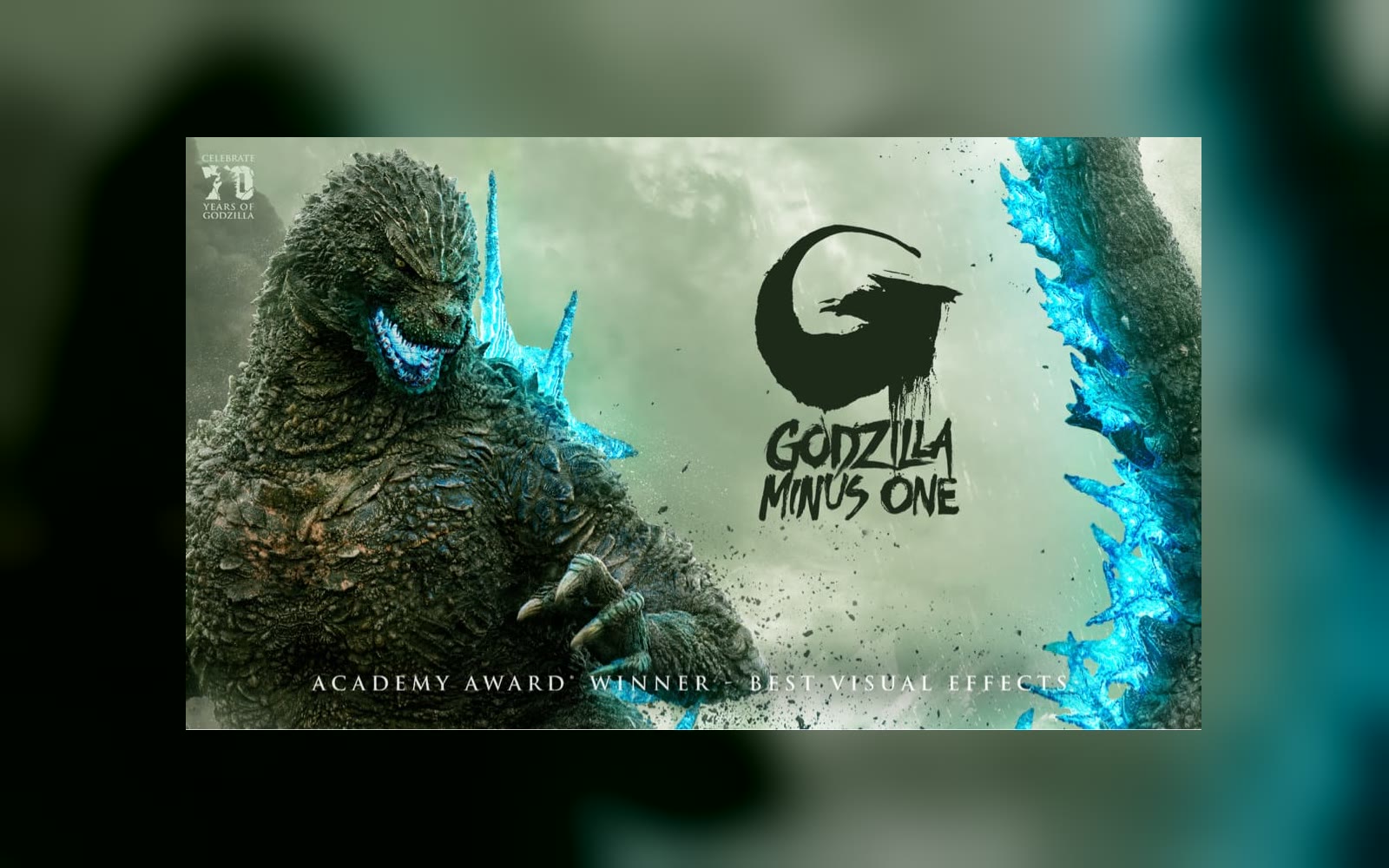
On 10 March 2024, at the Oscars in Los Angeles, a Japanese monster film beat four big-budget Hollywood films, among them Guardians of the Galaxy Vol. 3, Napoleon and Mission: Impossible – Dead Reckoning Part One, to the Oscar for Best Visual Effects. Godzilla Minus One was reportedly made for under $15 million. Toho, the studio, hasn't published a budget; the trade press reports about $15 million, and the Academy's own magazine put it at "less than $15 million".
It was the first Godzilla film ever nominated for an Oscar, and Toho says it was the first Japanese film nominated for, and to win, the visual effects award. Its director, Takashi Yamazaki, was the first director to win that award since Stanley Kubrick. The sequel, Godzilla Minus Zero, opens in Japan on 3 November and in North America on 6 November, so this is a good time to look at how a small team pulled it off and which of its habits a Nigerian production can actually use.
One person, three jobs
Yamazaki wrote the film, directed it and was its visual effects supervisor. He'd spent his early career on the effects side: he joined the Japanese effects house Shirogumi in 1986, and Shirogumi did the film's visual effects.
That meant one person made both the story decisions and the effects decisions. "This was a very small domestic production," Yamazaki told the Academy's magazine, A.frame. "We even did the VFX with a minimal team, and everyone did their best."
Draw every effects shot first
Yamazaki drew storyboards for every effects shot himself. From the storyboards, he and a few staff built simple computer-animated previews, and during the effects work he sat beside the artists and gave them directions directly.
On a tight budget, that kind of planning helps stop money leaking away. The aim is that nobody builds a set, shoots a plate or renders an effect that isn't already in a drawing everyone has agreed on.
A small team, a lot of shots
- About 35 artists made up the core effects team.
- About 610 effects shots are in the film.
- About eight months, after filming ended, is how long the team had to deliver them.
The Oscar went to four people: Yamazaki, effects director Kiyoko Shibuya, 3D CG director Masaki Takahashi and effects artist and compositor Tatsuji Nojima.
Spend where the camera looks
The production saved money by building only what the camera would see, and by doing by hand what bigger films hand to machines.
- No hydraulics. There was no money for a motion rig, so the crew rocked a boat set by hand to imitate the sea, and turned a cockpit set to make a plane look like it was flying.
- A real boat at sea. The first ocean battle was shot on the water with a real wooden boat. The hard part came later, when the effects team had to match Godzilla's much bigger computer-generated waves to the real ones.
- A simple road set. For the Ginza destruction scenes, the crew shot on a simple period road set and added the buildings in the computer.
- Miniatures as well as computers. Scale models were used alongside the digital work.
Let the team shape the script
Some of the film's ocean scenes exist because of a junior team member. A young compositor had been building ocean simulations at home as a hobby, and brought them into the office. Yamazaki then wrote more ocean scenes into the script. A small production can do that because the person writing the story is in the room with the people making the shots.
Sound: make your own
For Godzilla's roar, Yamazaki told A.frame, the team rented a baseball stadium. They played the original roar through the stadium's speakers and recorded the echo coming back. The neighbours complained.
A second release from the same film
Ten weeks after the film opened in Japan, while it was still in cinemas there, Toho put out Godzilla Minus One/Minus Color, a black-and-white version, in 340 Japanese cinemas from 12 January 2024, and for one week in North America from 26 January. It wasn't just the colour turned down: Yamazaki had the film regraded shot by shot. It was the same film made into a new event, with no new shooting.
What it earned
The film opened in Japan on 3 November 2023 in more than 500 cinemas, then in the US on 1 December. It took over $57 million in the US and Canada, and Toho counts it as the third-highest-grossing live-action foreign-language film in US box office history. Worldwide it made more than $100 million.
What a Nigerian production can take from it
- Draw it before you shoot it. Storyboards cost paper and time, not money. They tell you exactly what to build, rent and light, and nothing more.
- Keep the vision in one head. Yamazaki's three jobs cut out a lot of back and forth. On a small film, the director should be in the edit and in the effects decisions, not just on set.
- Build only what's in shot. A simple road set, with the buildings added digitally, worked for an Oscar winner. Frame tightly, dress what's in shot, and let the rest go.
- Do it by hand. A boat rocked by crew members and a cockpit turned by hand were good enough for an Oscar-winning film. Good grip and steady, controlled movement can stand in for expensive rigs.
- Record your own sound. Replaying an old roar through a stadium's speakers gave the monster its size. Get the effects and atmospheres you need on location, with proper microphones and a recorder.
- Find two releases in one film. A new grade, a new cut or a special screening can bring a finished film back to audiences.
We learned some of this the hard way. Our short Expectations was shot on an iPhone 6 and won Best Short at ASIFF 2021, and we've written up what that taught us about working small. For the kit side, we rent cameras, lights, a DJI gimbal and location sound gear in Abuja; prices are on our rental page. And if you want hands-on training in screenwriting, cinematography, lighting, sound, directing and editing, see our bootcamp.
Godzilla Minus Zero: what's next
Yamazaki is back as writer, director and visual effects supervisor, with Shirogumi on effects again. The new film picks up in 1949, two years after Minus One. GKIDS, Toho's North American distributor, says it's the first Japanese production ever "Filmed For IMAX", shot entirely in Japan on high-definition digital cameras certified by IMAX.
- Japan: 3 November 2026.
- North America: IMAX early-access screenings on 3 November, then wide release on 6 November.
- Africa: Toho's release list includes South Africa, Zambia and Mozambique on 6 November.
No Nigerian release date had been announced when we wrote this. Keep an eye on the Filmhouse, Genesis and Silverbird sites for listings.
Poster: Toho.